Common eCommerce SEO Mistakes That Hurt Rankings and Conversion.
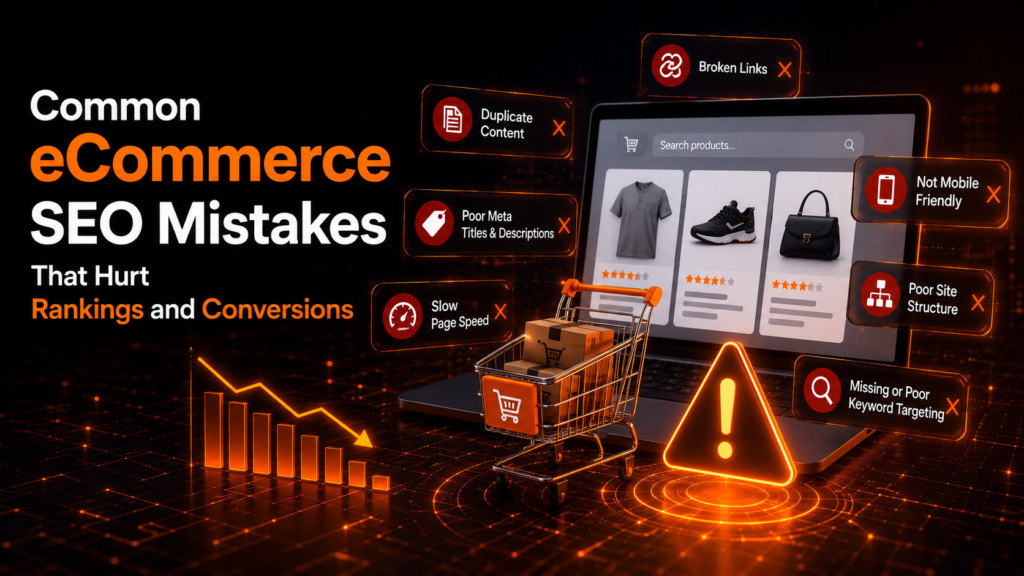
In today’s highly competitive digital marketplace, eCommerce SEO has become essential for brands that want to increase visibility, attract high-intent customers, and drive consistent online sales. A professionally optimized online store not only improves search engine rankings but also enhances user experience and conversion performance. However, many eCommerce businesses unknowingly make critical SEO mistakes that limit growth, reduce organic traffic, and impact overall revenue.
Understanding and avoiding these mistakes can help businesses build a stronger online presence and achieve long-term success in the evolving eCommerce landscape.
1. Poor Keyword Research Strategy
Keyword research is the foundation of every successful eCommerce SEO campaign. Many businesses make the mistake of targeting only broad and highly competitive keywords without considering search intent.
Instead of focusing on generic keywords like “shoes” or “smartphones,” businesses should target more specific long-tail keywords such as:
- “best running shoes for men”
- “wireless gaming headphones”
- “affordable skincare products online”
Long-tail keywords often attract users who are ready to make a purchase, leading to better conversions and lower competition.
2. Duplicate Product Descriptions
Using manufacturer-provided product descriptions is one of the most common SEO mistakes in eCommerce. Duplicate content makes it difficult for search engines to determine which page should rank higher.
Unique product descriptions:
- Improve SEO performance
- Increase customer trust
- Enhance brand credibility
- Improve conversion rates
Professional product copywriting can make products more engaging while helping websites stand out in search results.
3. Slow Website Loading Speed
Website speed directly impacts both user experience and SEO rankings. Customers expect online stores to load quickly, especially on mobile devices.
A slow-loading website can lead to:
- Higher bounce rates
- Lower conversions
- Reduced search rankings
- Poor user experience
Common causes of slow speed include unoptimized images, excessive plugins, weak hosting services, and unnecessary scripts.
Improving website performance through image compression, caching, and clean coding can significantly enhance SEO and customer satisfaction.
4. Weak Mobile Optimization
Mobile commerce continues to dominate the eCommerce industry. If a website is not fully optimized for mobile users, businesses risk losing valuable traffic and sales.
A mobile-friendly eCommerce website should include:
- Responsive design
- Fast mobile loading speed
- Easy navigation
- Mobile-friendly checkout process
- Readable fonts and buttons
Google prioritizes mobile-first indexing, making mobile optimization essential for higher rankings.
5. Missing or Poor Meta Tags
Meta titles and meta descriptions play a major role in attracting clicks from search results. Many eCommerce stores either leave them blank or duplicate the same meta tags across multiple pages.
Effective meta tags should:
- Include target keywords
- Be unique for each page
- Encourage users to click
- Clearly describe the product or page content
Optimized meta tags improve click-through rates and increase search visibility.
6. Poor Product Page Optimization
A product page should do more than display a product image and price. Weak product pages often fail to rank because they lack valuable SEO content.
A high-converting product page should include:
- SEO-friendly product titles
- Detailed product descriptions
- Product specifications
- Customer reviews
- High-quality optimized images
- FAQ sections
- Internal links to related products
Well-optimized product pages improve both rankings and conversions.
7. Ignoring Image SEO
Images are essential in eCommerce because customers rely heavily on visuals before making purchases. However, many businesses fail to optimize images properly.
Image SEO best practices include:
- Using descriptive file names
- Adding alt text
- Compressing image sizes
- Using modern image formats
- Implementing lazy loading
Optimized images improve website speed and increase visibility in Google Image Search.
8. Poor Website Structure and Navigation
A confusing website structure can negatively affect both user experience and search engine crawling.
A professional eCommerce website should have:
- Clear product categories
- Organized navigation menus
- Proper internal linking
- Simple URL structures
- Breadcrumb navigation
Easy navigation helps customers find products faster and allows search engines to crawl pages more effectively.
9. Lack of Customer Reviews
Customer reviews build trust and improve conversion rates. They also provide fresh user-generated content that benefits SEO.
Reviews help:
- Increase credibility
- Improve customer confidence
- Add keyword-rich content naturally
- Boost product page engagement
Encouraging authentic customer reviews can positively impact both rankings and sales.
10. Ignoring Technical SEO
Technical SEO is often overlooked in eCommerce websites. Issues such as broken links, duplicate pages, crawl errors, and missing XML sitemaps can reduce search visibility.
Important technical SEO practices include:
- Fixing broken links
- Optimizing crawlability
- Using structured data
- Improving Core Web Vitals
- Creating XML sitemaps
- Setting proper redirects
Regular technical SEO audits help maintain strong website performance.
11. Thin Content Across Category Pages
Many category pages contain very little content, making it difficult for search engines to understand page relevance.
Adding optimized introductory content, FAQs, and helpful descriptions to category pages can improve rankings while providing more value to users.
12. Neglecting Content Marketing
Content marketing plays a major role in driving organic traffic. Many eCommerce businesses focus only on products and ignore blog content, guides, and educational resources.
Content marketing helps:
- Improve keyword rankings
- Increase organic traffic
- Build brand authority
- Educate customers
- Support internal linking strategies
Publishing high-quality blogs regularly can strengthen overall SEO performance.
13. Poor Checkout Experience
Even if SEO successfully brings traffic to an online store, a poor checkout experience can reduce conversions.
Common checkout problems include:
- Complicated forms
- Slow payment processing
- Lack of payment options
- Forced account creation
A smooth and user-friendly checkout process improves customer satisfaction and increases completed purchases.
14. Ignoring Local SEO Opportunities
For businesses serving specific regions or cities, local SEO is extremely important.
Local SEO strategies include:
- Optimizing Google Business Profile
- Using location-based keywords
- Creating local landing pages
- Collecting local customer reviews
Local SEO helps businesses attract nearby customers searching for products online.

Conclusion
eCommerce SEO is more than just improving rankings—it’s about creating a seamless shopping experience that attracts, engages, and converts customers. Businesses that avoid common SEO mistakes can achieve stronger visibility, higher organic traffic, and improved conversion rates.
In 2026, successful eCommerce brands will focus on technical optimization, high-quality content, mobile performance, and customer experience to stay ahead in the competitive digital marketplace. Investing in professional SEO strategies today can create long-term growth and sustainable online success.