
advertising agency in thiruvadhuparam
advertising agency in thiruvadhuparam
The digital landscape is evolving faster than ever before, and businesses that fail to adapt risk falling behind their competitors. Digital Marketing Trends in 2026 are being shaped by artificial intelligence, changing consumer behavior, voice and visual search, first-party data, and the growing importance of trust and brand authority. Traditional marketing methods are no longer enough to capture customer attention in a world where people expect personalized experiences and instant answers. Businesses that understand these changes and implement modern strategies will be better positioned to generate quality leads, improve customer relationships, and achieve sustainable growth.
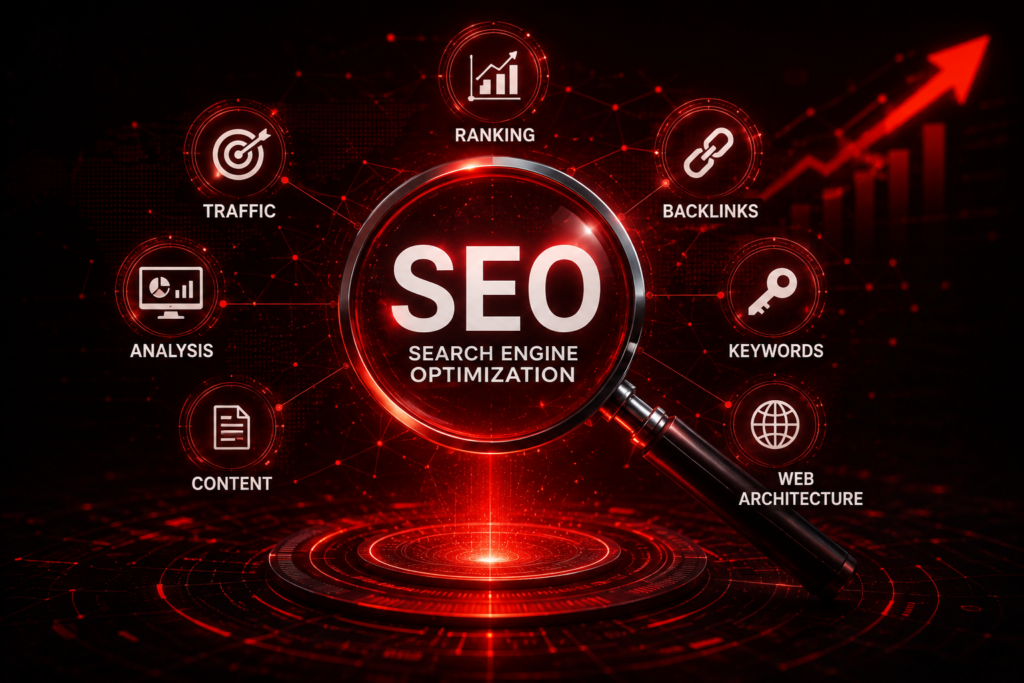
One of the biggest shifts in Digital Marketing Trends in 2026 is the growing influence of AI-powered search experiences. Search engines are no longer limited to displaying a list of website links. Instead, AI-generated summaries, conversational search, and answer engines are providing users with direct responses. This means businesses must create high-quality, informative, and trustworthy content that answers real customer questions. Rather than focusing only on rankings, marketers should prioritize creating content that demonstrates expertise, experience, authority, and trust.
Another important development in Digital Marketing Trends in 2026 is the increasing demand for personalized customer experiences. Consumers expect brands to understand their preferences and provide recommendations based on their interests and previous interactions. Businesses are now using artificial intelligence to analyze customer behavior, automate marketing campaigns, and deliver personalized emails, advertisements, and website experiences. This level of personalization improves customer satisfaction while significantly increasing conversion rates.
Video marketing continues to dominate online engagement and remains one of the strongest Digital Marketing Trends in 2026. Short-form videos on platforms such as Instagram, YouTube Shorts, LinkedIn, and Facebook are generating higher engagement than traditional image posts. Businesses are investing in educational videos, product demonstrations, customer testimonials, behind-the-scenes content, and live sessions to connect with their audience. Authentic and informative videos often outperform highly polished advertisements because consumers value transparency and genuine communication.
Search engine optimization has also undergone significant transformation. Among the most important Digital Marketing Trends in 2026 is the shift from keyword stuffing toward topical authority. Search engines now reward websites that consistently publish valuable content covering an entire subject rather than isolated articles targeting individual keywords. Businesses should develop comprehensive content strategies that include blogs, case studies, FAQs, guides, and resource pages to establish themselves as trusted industry experts. Internal linking, content updates, and user-focused writing are becoming more valuable than simply acquiring backlinks.
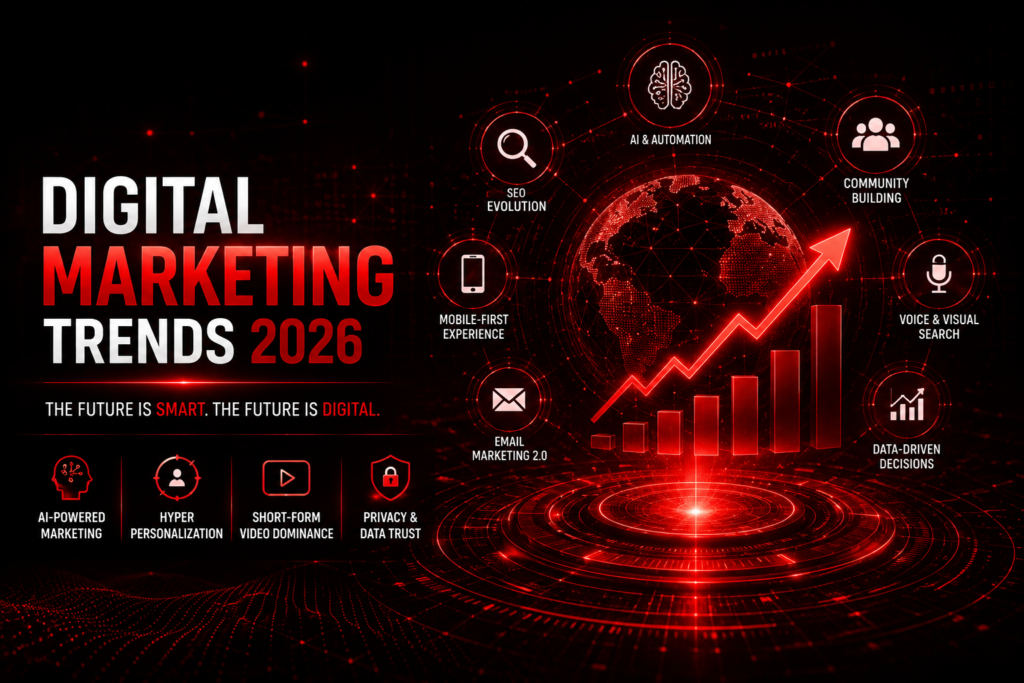
Social media platforms continue to evolve rapidly. One of the key Digital Marketing Trends in 2026 is the emphasis on community building rather than simply increasing follower counts. Brands that actively respond to comments, encourage conversations, and build meaningful relationships with their audience are achieving stronger long-term engagement. Customers are increasingly influenced by authentic user-generated content, customer reviews, and creator partnerships rather than traditional promotional posts. Businesses should focus on building loyal communities that trust their brand instead of chasing vanity metrics.
Data privacy is becoming a major priority for businesses around the world. As third-party cookies continue to disappear, Digital Marketing Trends in 2026 are placing greater importance on first-party data collection. Companies are encouraging customers to subscribe to newsletters, create accounts, participate in loyalty programs, and share their preferences voluntarily. Collecting customer information ethically allows businesses to deliver personalized marketing while maintaining compliance with privacy regulations and strengthening customer trust.
Voice search and visual search are also changing how consumers discover products and services. More people are using smart devices and AI assistants to ask conversational questions instead of typing short keywords into search engines. This shift is one of the emerging Digital Marketing Trends in 2026, encouraging businesses to optimize their content for natural language queries and structured information. High-quality images, descriptive alt text, and conversational content can significantly improve visibility across modern search platforms.
Automation has become an essential part of successful marketing strategies. Businesses are using AI tools to schedule social media content, analyze campaign performance, generate reports, manage customer support, and automate email workflows. However, automation should support human creativity rather than replace it. One of the defining Digital Marketing Trends in 2026 is combining AI efficiency with authentic storytelling, emotional branding, and meaningful customer interactions. Businesses that strike this balance will create stronger customer relationships and more effective campaigns.
Influencer marketing is also evolving. Instead of focusing only on celebrities with millions of followers, brands are increasingly partnering with micro and niche influencers who have highly engaged audiences. These creators often generate better engagement, stronger trust, and higher conversion rates because their recommendations feel more genuine. This approach aligns perfectly with Digital Marketing Trends in 2026, where authenticity matters more than audience size. Businesses should carefully choose influencers whose values and audience match their brand identity.
Another major priority for businesses is measuring performance more accurately. Modern marketing success is no longer determined only by website traffic or social media impressions. Companies are focusing on customer lifetime value, return on advertising spend, engagement quality, lead generation, and conversion optimization. Businesses that regularly analyze their marketing data can identify successful strategies, eliminate underperforming campaigns, and make informed decisions that improve long-term profitability. Data-driven marketing is becoming essential for businesses of every size.
Brand trust is now one of the strongest competitive advantages. Customers are more likely to purchase from companies that demonstrate expertise, transparency, and consistency across every digital channel. Publishing educational content, responding to customer feedback, maintaining accurate business information, and providing valuable resources all contribute to building long-term credibility. Businesses that consistently deliver value will be rewarded with stronger customer loyalty and higher search visibility.
Looking ahead, businesses must understand that digital marketing will continue to evolve as technology advances. Companies that embrace innovation, invest in quality content, leverage artificial intelligence responsibly, and prioritize customer experience will remain competitive in an increasingly crowded marketplace. Success will come to businesses that adapt quickly while maintaining authenticity and delivering real value to their audience.
In conclusion, Digital Marketing Trends in 2026 are transforming the way businesses connect with customers, generate leads, and build lasting relationships. From AI-powered search and personalized experiences to video marketing, first-party data, automation, and community-driven branding, these trends are redefining digital success. Businesses that stay informed, continuously optimize their strategies, and focus on providing genuine value will be well-positioned to achieve sustainable growth in the years ahead.

Grow your brand with creative advertising, digital marketing, branding, and media solutions tailored for success.
Call us for creative growth solutions.
Send us your project details anytime
Serving brands across Kerala & beyond.
Copyright © 2026 funads
WhatsApp us